Dietary guide
Is Furikake Vegan? It Depends on the Flavor -- Noritama and Katsuo Aren't

Furikake isn't one product -- it's a whole aisle of dozens of flavors, and whether a jar is vegan depends entirely on which one you pick up. Japan's two best-selling flavors are both off-limits for a vegan diet: noritama (egg) and katsuo/okaka (bonito). But others -- yukari (shiso) and plain seaweed-sesame blends without hidden fish extract -- are genuinely plant-based.
Noritama -- no, it's egg
Noritama has been Japan's flagship furikake since Marumiya Foods launched it in January 1960, and it remains the category's best-selling flavor decades later. Its defining ingredient is dried, seasoned egg granules (sold on modern labels as an "egg yolk processing product") mixed with nori and sesame. Nagatanien's competing noritama-style furikake lists the same egg-based build, and both brands declare egg as an allergen on the package. There is no egg-free version of "noritama" -- the egg is the flavor.
Katsuo / okaka -- no, it's bonito
The other everyday flavor, katsuo (also sold as okaka), is built on katsuobushi -- dried, smoked, fermented bonito flakes -- as its first listed ingredient, blended with soy sauce, sugar and sesame. It's a fish product through and through, not a "smoky seasoning."
Yukari -- yes, shiso only
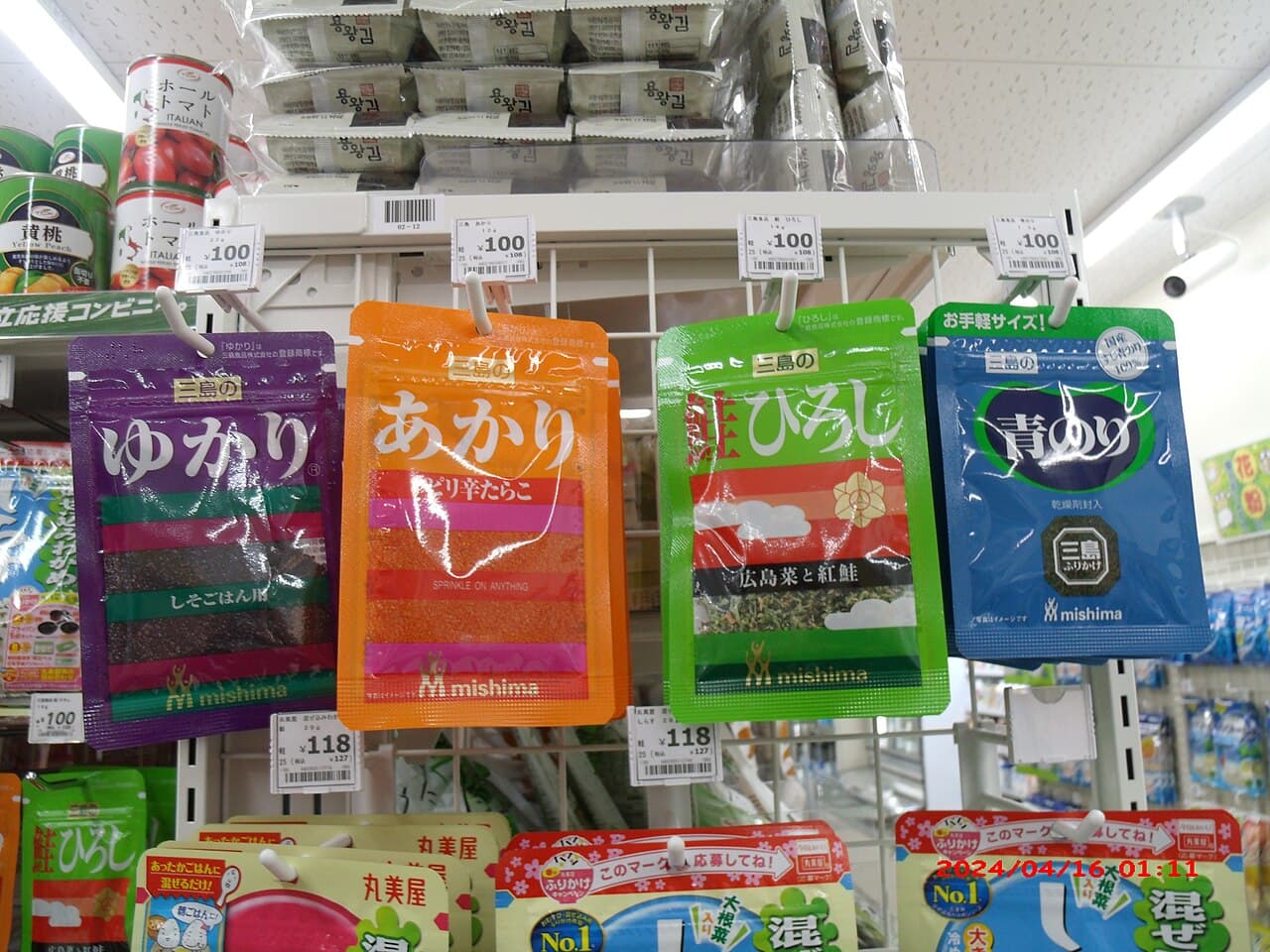
Mishima Foods' yukari (on shelves since 1970, made by reusing the salted red shiso used to dye pickled plums) is genuinely simple: salted red shiso, sugar, salt, and a yeast-extract seasoning for umami. No egg, no fish, no dairy. It's the safest big-brand flavor to reach for by default.
Nori komi / plain seaweed-sesame -- usually yes, but read the label
A seaweed-and-sesame furikake (sometimes labeled "nori komi") can be entirely plant-based -- Pono Hawaiian Foods' Nori Komi blend, for instance, lists only seaweed, sesame, salt, sugar, yeast extract, kale powder and rice bran oil. But the name alone doesn't guarantee it: some Japanese "nori goma" (seaweed-sesame) furikake quietly add fish or shellfish extract for extra umami. The word "nori" describes the seaweed, not the whole recipe.
How to check any bag in five seconds
Flip to the 原材料名 (ingredients) panel and scan for: 卵 / 卵黄 (egg), かつお / 鰹節 (bonito), 魚介 (seafood), and any plain "エキス" (extract) that isn't specifically labeled 酵母 (yeast), 昆布 (kelp) or 椎茸 (shiitake). No hits, no problem.
Where furikake shows up on your trip
It's sprinkled on rice at breakfast buffets, folded into onigiri, and stocked by the shelf-load at every konbini. For the wider picture of what's safe in that same aisle, see our guides to hidden animal ingredients in Japanese food, reading Japanese food labels, and vegan konbini shopping. If you're building a vegan breakfast tray, see vegan Japanese breakfast and is onigiri vegan.
Ingredient lists above were checked directly against each brand's official page as of July 2026. Manufacturers do change recipes, so if you're strict, glance at the pack in front of you rather than relying on memory.
Sources
FAQ
- Is noritama furikake vegan?
- No. Noritama is built on egg granules (sold as "egg yolk processing product" on ingredient labels) mixed with nori -- it's one of the two most common non-vegan furikake flavors.
- Which furikake flavors are vegan?
- Shiso-based yukari and plain seaweed-sesame (nori komi) blends without fish extract are typically vegan. Always check the ingredient panel for egg, bonito, or "seafood extract" before assuming a flavor is safe.
- Does a "nori" flavor automatically mean it's vegan?
- No -- some Japanese nori-sesame furikake blends still list fish or shellfish extract as a flavor booster. The word "nori" describes the seaweed, not the whole recipe; read the label.