
Dietary guide
Is Yakisoba Vegan in Japan? Usually No -- the Sauce Hides Meat Extract
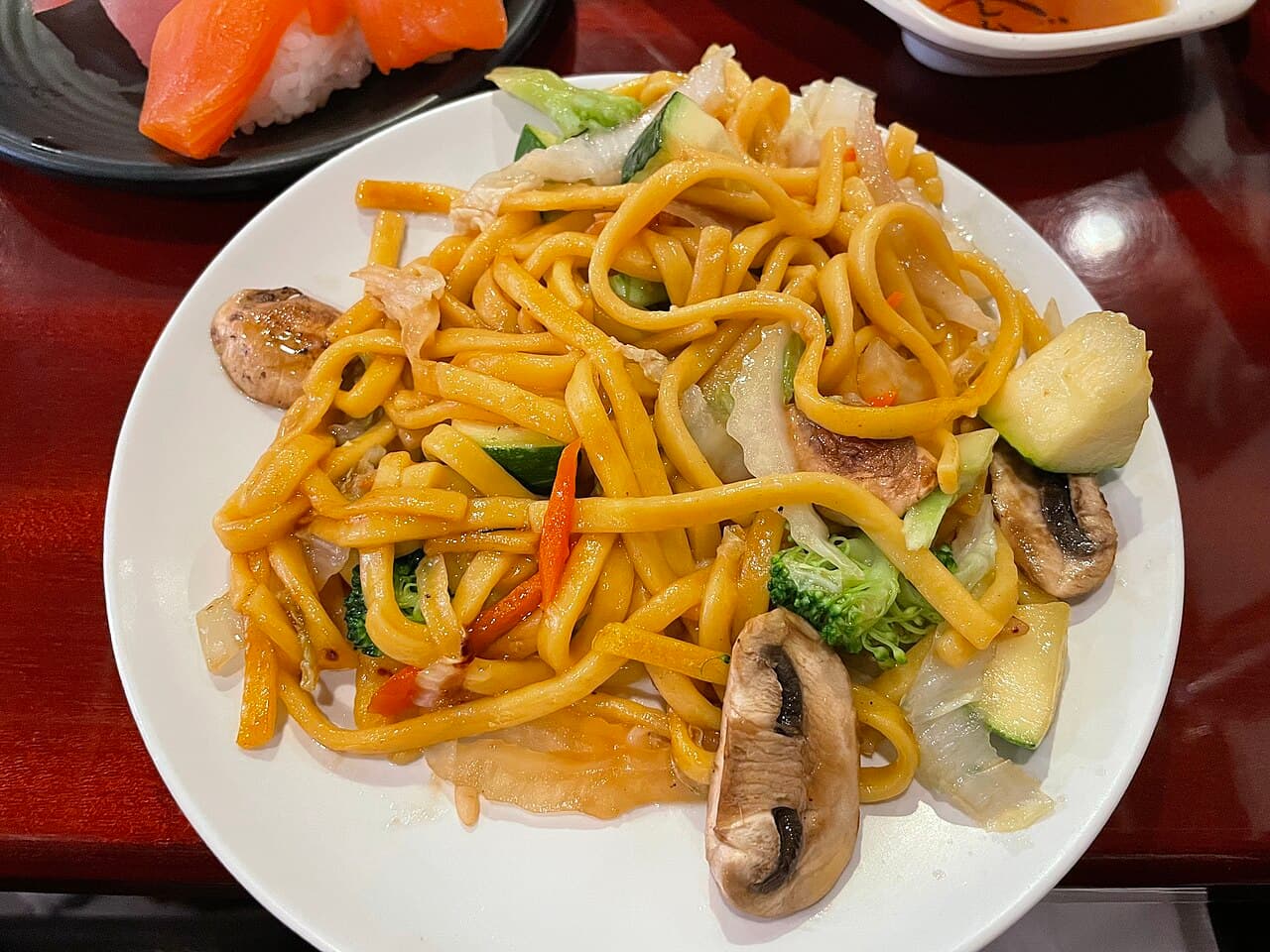
© HeatherMarieKosur (CC BY-SA 4.0) via Wikimedia Commons · CC BY-SA 4.0
Fresh yakisoba noodles are simple: wheat flour, water, a little oil or kansui (alkaline mineral water). The noodles alone are vegan. The catch is the thick, sweet-savory sauce ladled on top at every festival stall, konbini hot case and teppan restaurant in Japan.
What's in the sauce
Otafuku -- Japan's dominant yakisoba-sauce brand -- lists its standard retail sauce as containing sugar, vinegar, vegetables and fruit, soy sauce, hydrolyzed soy protein, spices, oyster extract, meat extract, scallop extract, bonito-flavored seasoning, kelp and fish extract, plus yeast extract. Its allergen declaration names wheat, soy, chicken and pork. This is the sauce you'll meet by default anywhere in Japan that serves yakisoba.
The twist: a vegan version exists -- just not in Japan
Otafuku also sells a "Vegan Yakisoba Sauce" through its US arm, explicitly labeled Vegan on the product page: water, sugars, vinegar, soy sauce, tomato paste, fruit purees (raisin, date, apple, peach), onion, garlic and yeast extract -- no oyster, meat or fish extract at all. It's a genuine reformulation from the same company, not a knockoff. But it's a US foodservice product; if you're ordering yakisoba at a matsuri stall or restaurant inside Japan, assume the standard (non-vegan) sauce unless told otherwise.
Instant and packaged yakisoba
Cup and bag yakisoba built around a powder or liquid sauce sachet generally draw on the same style of savory base. Check the sachet's own ingredient panel for the same red flags -- オイスターエキス (oyster extract), 肉エキス (meat extract), 魚介エキス (seafood extract) -- rather than assuming a packaged product is safer than a fresh one.
Vegan workarounds
A homemade sauce built from soy sauce, ketchup and a vegan Worcestershire-style sauce reproduces the flavor without any animal extracts, and it's what many vegan cafes in Japan use. For eating out, see our guides to vegan at a Japanese family restaurant, vegan at a Japanese izakaya and vegan konbini shopping for where to actually find a safe plate.
Ingredient lists above were checked directly against Otafuku's own official pages as of July 2026. Formulations can change, so check the bottle in front of you if you're strict.
Sources
常见问题
- Are yakisoba noodles vegan?
- Yes -- fresh yakisoba noodles are just wheat flour, water and a little oil or kansui (alkaline mineral water). The sauce, not the noodles, is what usually isn't vegan.
- Does yakisoba sauce contain meat?
- Otafuku's standard sauce, the dominant brand sold in Japan, lists oyster extract, meat extract and fish extract. A separately-labeled "Vegan Yakisoba Sauce" from the same company exists, but it's a US foodservice product, not the one typically used at Japanese stalls and restaurants.
- Is yakisoba vegetarian?
- Usually not -- the noodles are vegetarian (wheat flour, water, a little oil or kansui), but Otafuku's standard yakisoba sauce, Japan's dominant brand, lists oyster extract, meat extract and fish extract, so festival-stall and restaurant yakisoba is normally neither vegetarian nor vegan. The fix is a meat-free sauce (or plain noodles), not different noodles. (as of 2026-07)
- Is instant or cup yakisoba vegan?
- Usually not -- cup and bag yakisoba built around a powder or liquid sauce sachet generally draw on the same savory base as bottled yakisoba sauce. Check the sachet's own ingredient panel for the same red flags -- オイスターエキス (oyster extract), 肉エキス (meat extract) and 魚介エキス (seafood extract) -- rather than assuming a packaged product is safer than a fresh one.
- How can I eat vegan yakisoba in Japan?
- Swap the sauce, not the noodles: a homemade sauce built from soy sauce, ketchup and a vegan Worcestershire-style sauce reproduces the flavor with no animal extracts, and it's what many vegan cafes in Japan use. At a festival stall or teppan restaurant, assume the standard (non-vegan) sauce unless told otherwise -- only the plain noodles are safe.