
Area guide
Vegan Restaurants in Kyoto: A Plant-Based Guide to Shojin, Tofu & Soy-Milk Ramen
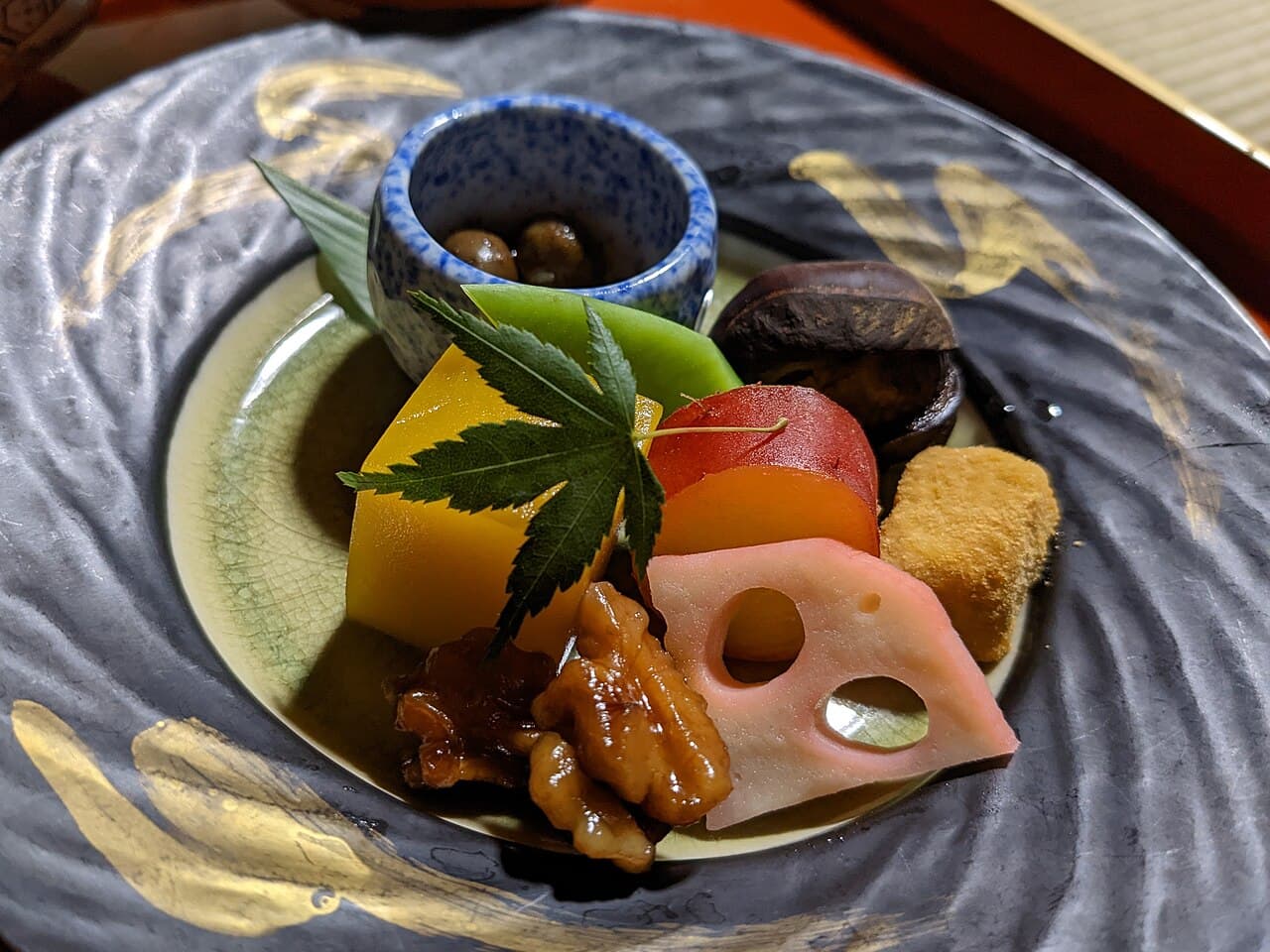
Kyoto's four dependable vegan meals: Shigetsu, Towzen, UNO RAMEN, Tousuiro's Rokuhara. Those kitchens are plant-based by design, so you are not asking a stranger to vouch for a stock pot. Everywhere else in Kyoto, one question decides the meal. Every price, opening time and booking rule below was read from the venue's own website as of 2026-09-23.
The one question: dashi
Most Japanese savoury cooking starts with dashi, and the standard version is not plant-based — the common form is kombu simmered with kezurikatsuo, shavings of fermented skipjack tuna, and dried sardine (niboshi) stock is the other default. Kombu-only and dried-shiitake dashi exist as variations, and they are what a shojin kitchen has to work with, because Zen temple cuisine uses no meat or fish at all. The practical consequence: a plate of "just vegetables" or a plain miso soup in Kyoto is usually not vegan.
The phrase that does most of the work is "sakana dashi nashi de" — without fish stock. Then name egg (tamago), dairy (nyuseihin) and honey (hachimitsu) out loud, since those are not covered by it. Our is dashi vegan? explainer has the longer version.
Arashiyama — Shigetsu, inside the Tenryu-ji grounds
Shigetsu is the dining hall within the Tenryu-ji temple grounds, and it serves nothing but shojin ryori — so the dashi question is answered before you sit down.
The temple's own page lists three set meals: Yuki (Snow) ¥3,800 — rice, soup and five side dishes; Tsuki (Moon) ¥6,500 — six side dishes; Hana (Flower) ¥9,000 — seven. Service runs 11:00–14:00 and the hall is closed on Thursdays.
Booking is not optional and the notice period differs by course: Yuki needs at least two days, while Tsuki and Hana need three days and a party of two or more. Reservations are taken by phone on 075-882-9725 (9:00–17:00). Budget one extra line: garden admission is charged separately, ¥500 per guest.
Shimogamo — Towzen, the soy-milk ramen specialist
Towzen (豆禅) is a vegan soy-milk ramen shop in Shimogamo, north of the sightseeing core. Its own site lists lunch 11:30–15:30, last order 14:30, and dinner 18:00–21:30, last order 20:30 — on Friday, Saturday and Sunday only. Wednesday and Thursday are closed, and Tuesday is closed on alternate weeks.
Two things catch travellers out. The first is the distance: this is a deliberate trip, not a detour. The second is newer and more important — the shop has stopped accepting reservations, a decision it explains on its own site after repeated cancellations and late arrivals. Go early, expect to wait, and do not plan the rest of your day around a fixed seating. Dessert includes a gluten-free vegan gateau chocolat.
Gion, Kyoto Station and Umekoji — UNO RAMEN
Gion Soy Milk Ramen Uno Yukiko is no longer a single shop. Its group site lists four Kyoto locations as of 2026-09-23: Gion (Kamei-cho, Higashiyama), a Sanjo branch run as a sushi-and-izakaya, one on the 10th floor of the Kyoto Station Building inside Kyoto Ramen Koji (Ramen Alley), and Umekoji, which shares a building with UNO RETREAT, the group's vegan and gluten-free hotel.
The group states that no dish at any branch contains animal-derived ingredients, that rice-flour noodles made in a dedicated gluten-free facility are the default, and that specific dishes are five-precept (oriental vegan) — cooked without the five pungent alliums, the soy-milk Setsugetsu ramen among them — which the group asks you to confirm with staff when ordering. That last point is rare enough in Japan to be worth a detour on its own if you keep oriental-vegan rules.
The station branch is the quietly useful one: a fully plant-based bowl you can reach with a suitcase, between trains — 11:00–22:00, last order 21:30. Gion runs 11:30–21:00 (last order 20:30) with irregular days off, and Sanjo serves lunch 11:00–15:00 and dinner 17:00–22:30. Only Sanjo takes reservations: Gion, Kyoto Station and Umekoji ask you to walk in during opening hours. Umekoji's hours are the one gap on the group site.
Kiyamachi — Tousuiro's Rokuhara course
Tousuiro serves tofu kaiseki and yuba along the Takase canal. Do not order the standard courses and hope: the Kiyamachi branch has a named vegetarian course, Rokuhara (六波羅), ¥12,000 (tax and service included), and its own menu describes it as using no seafood, meat or dairy whatsoever — and states that even the stock is made *without niboshi or katsuobushi***.
One honest caveat: egg and honey are not mentioned in that description. If you are strictly vegan, settle both when you book on 075-251-1600 — reservations and course questions are taken by phone, and the restaurant asks that calls come in its three quiet windows, 10:00–11:30, 15:00–17:00 and 19:30–21:00. The branch is open Mon–Sat 11:30–15:00 and 17:00–22:00, Sundays and holidays 11:45–15:00 and 17:00–21:30, with entry until 20:00, and it closes only over the New Year period and for work on the riverside terrace — including all day on Wednesday 21 October 2026, when the terrace comes down.
Which one, when
- A quiet, entirely plant-based temple lunch you can book days ahead → Shigetsu. ¥3,800–9,000, plus ¥500 garden admission.
- Ramen, and you cannot reserve anyway → Towzen. Walk-in only, closed Wednesday and Thursday.
- Ramen with a train to catch → UNO RAMEN, Kyoto Station Building 10F.
- No alliums (five-precept / oriental vegan) → UNO RAMEN's gokun-free dishes, confirmed with staff when you order.
- A dinner you would call an occasion → Tousuiro's Rokuhara, ¥12,000 — confirm egg and honey first.
Make an afternoon of it
Shigetsu sits inside Tenryu-ji, so lunch and the temple visit are the same outing. Kyoto's other set pieces — tea, gardens, craft workshops — are our sister site MICHI's beat: cultural experiences in Kyoto. Matcha itself is plant-based; the wagashi served alongside it may contain egg or gelatine, so ask before the bowl arrives.
What we could not confirm
None of the four venues states on its own website that it keeps an English menu, so we no longer claim one — assume you may need the phrases above. UNO RAMEN publishes hours for Gion, Sanjo and Kyoto Station but not for its new Umekoji branch, so check that one before you go. Everything else here was verified on 2026-09-23 against the sources listed below; Kyoto hours and prices change without notice, and the phone numbers above are the fastest way to check.
Places we’ve confirmed
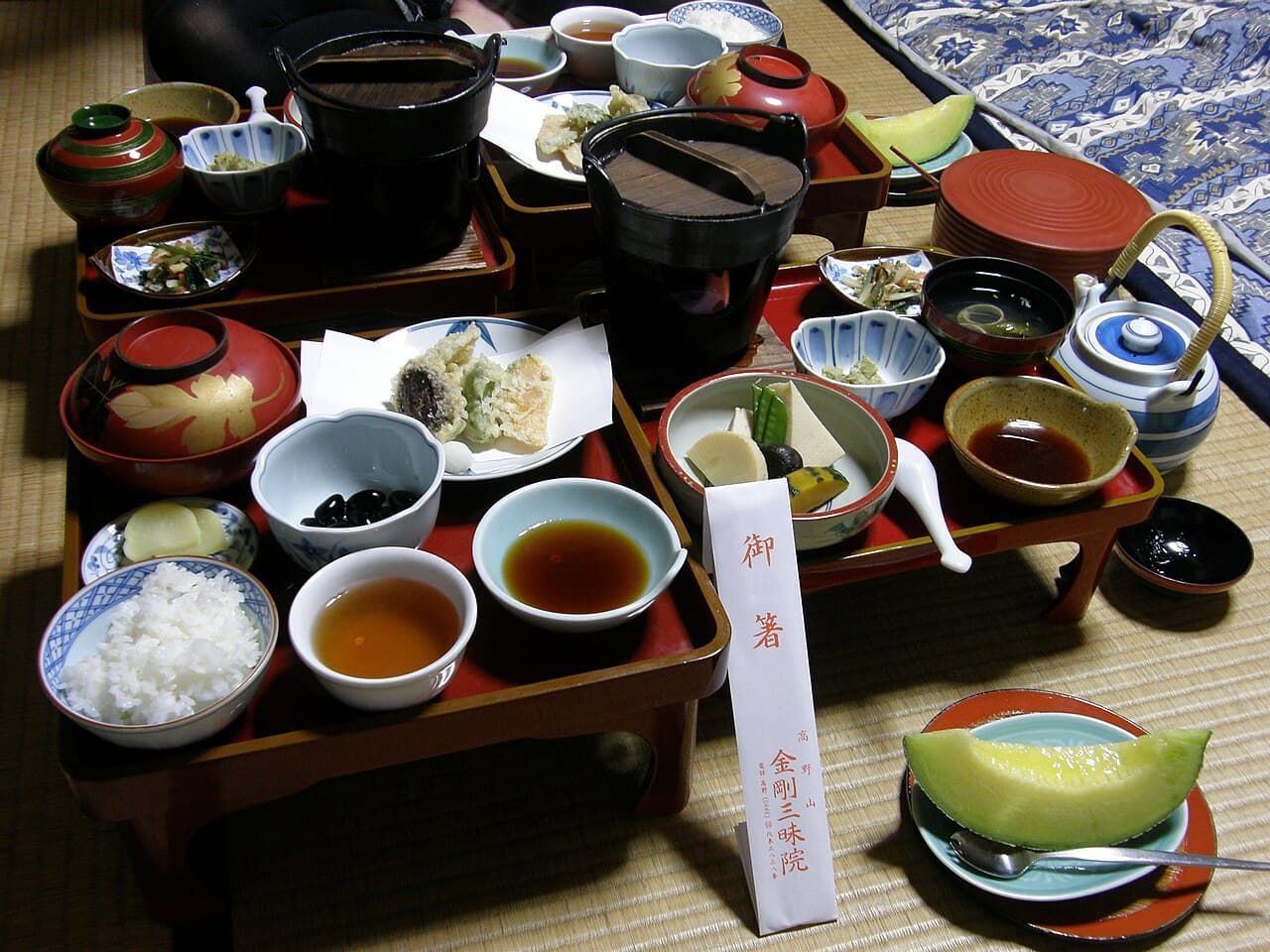
Shigetsu (Tenryu-ji)
Seasonal multi-course shojin set served in lacquerware
Temple-run Zen vegetarian dining inside Tenryu-ji, one of Arashiyama's great Zen temples (Michelin Bib Gourmand, Kyoto-Osaka 2025), served as a seasonal multi-course set in lacquerware. Traditional shojin uses kombu and shiitake rather than fish dashi, so there is no bonito broth; the menu does not publicly itemise egg or honey, so strict vegans should confirm when reserving. A garden admission fee applies on top of the course.
- Vegetarian
- Vegan
- Dairy-free
- Date
- Anniversary
- Casual
- Private room
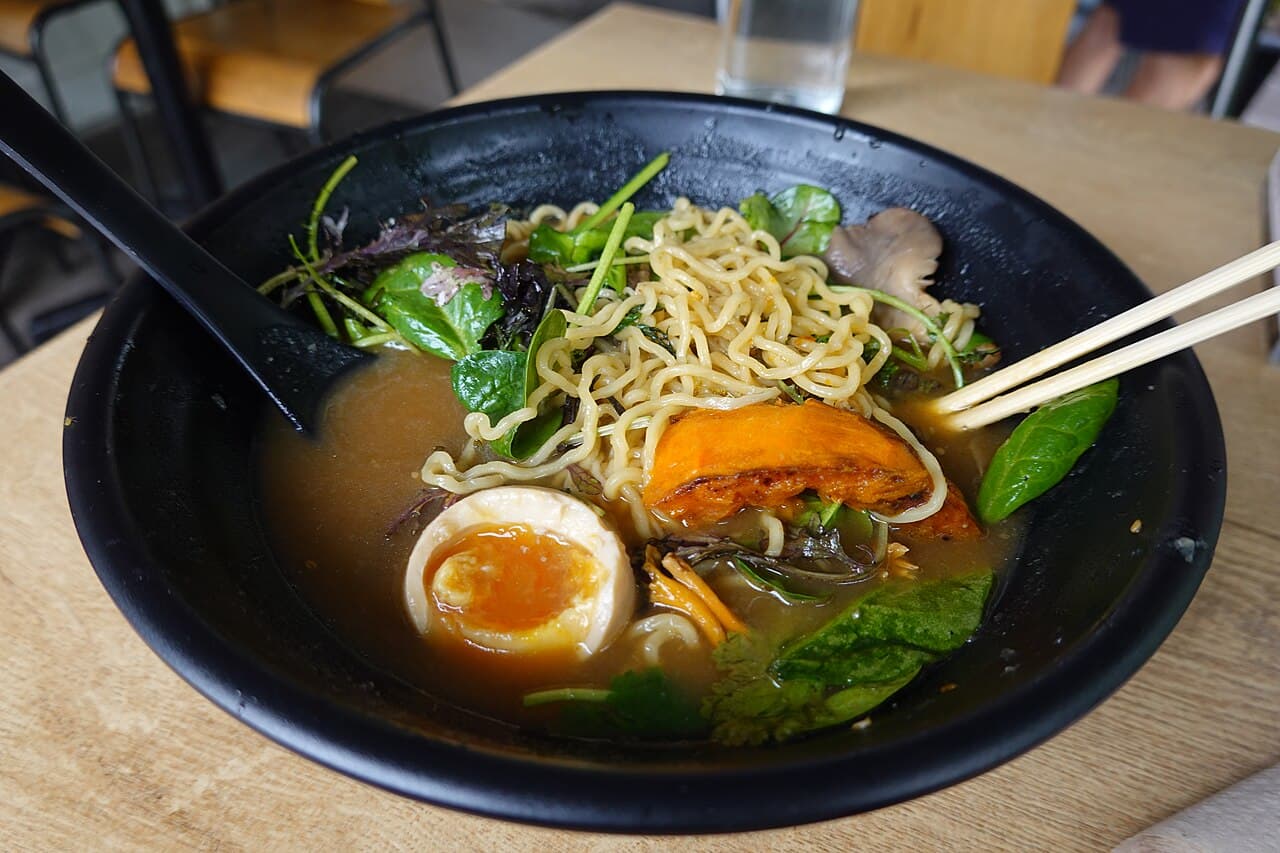
Towzen (Mamezen)
Creamy soy-milk ramen with a kombu-and-soy broth (no fish dashi)
A small fully-vegan soy-milk ramen shop in quiet Shimogamo, vegan since 2018, with a creamy kombu-and-soy-milk broth and no fish dashi at all — one of the cleanest strict-vegan ramen options in Kyoto. It also avoids the Buddhist five pungent spices (onion and garlic). The noodles contain wheat, so it is vegan but not gluten-free; closed midweek, so check days before visiting.
- Vegan
- Vegetarian
- Dairy-free
- Casual
- Solo
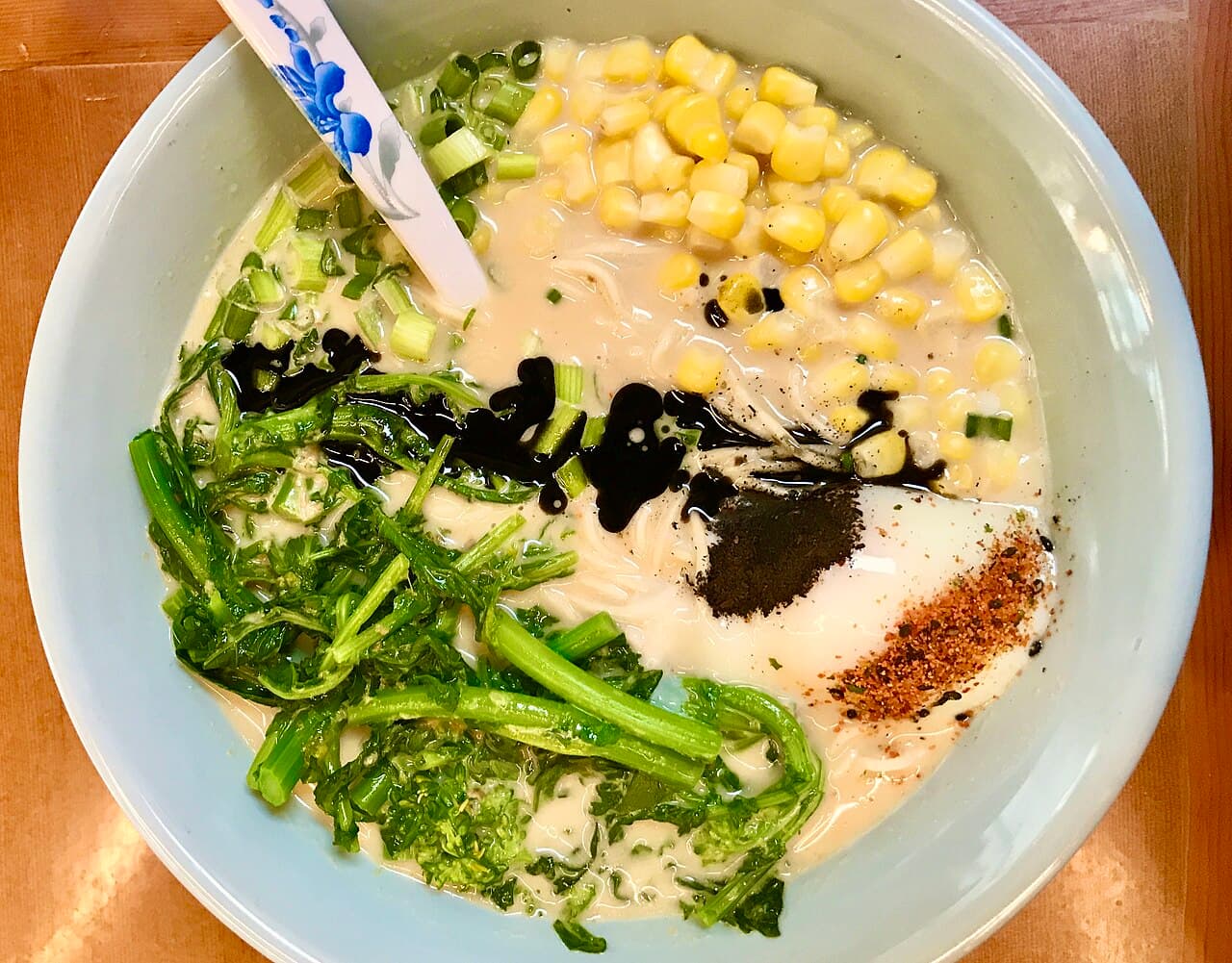
Gion Soy Milk Ramen Uno Yukiko
Creamy soy-milk ramen with rice-flour noodles and gluten-free soy sauce
A vegan and gluten-free ramen specialist in Gion run by patissier Yukiko Uno, using rice-flour-and-kelp noodles and gluten-free soy sauce in a soy-milk broth — one of Kyoto's most reliably gluten-free, fish-dashi-free ramen options. The strongest 'dedicated kitchen' claims come from third-party listings rather than the venue itself, so celiac diners should confirm cross-contamination protocol directly with staff.
- Vegan
- Vegetarian
- Gluten-free
- Dairy-free
- Casual
- Solo
- Date
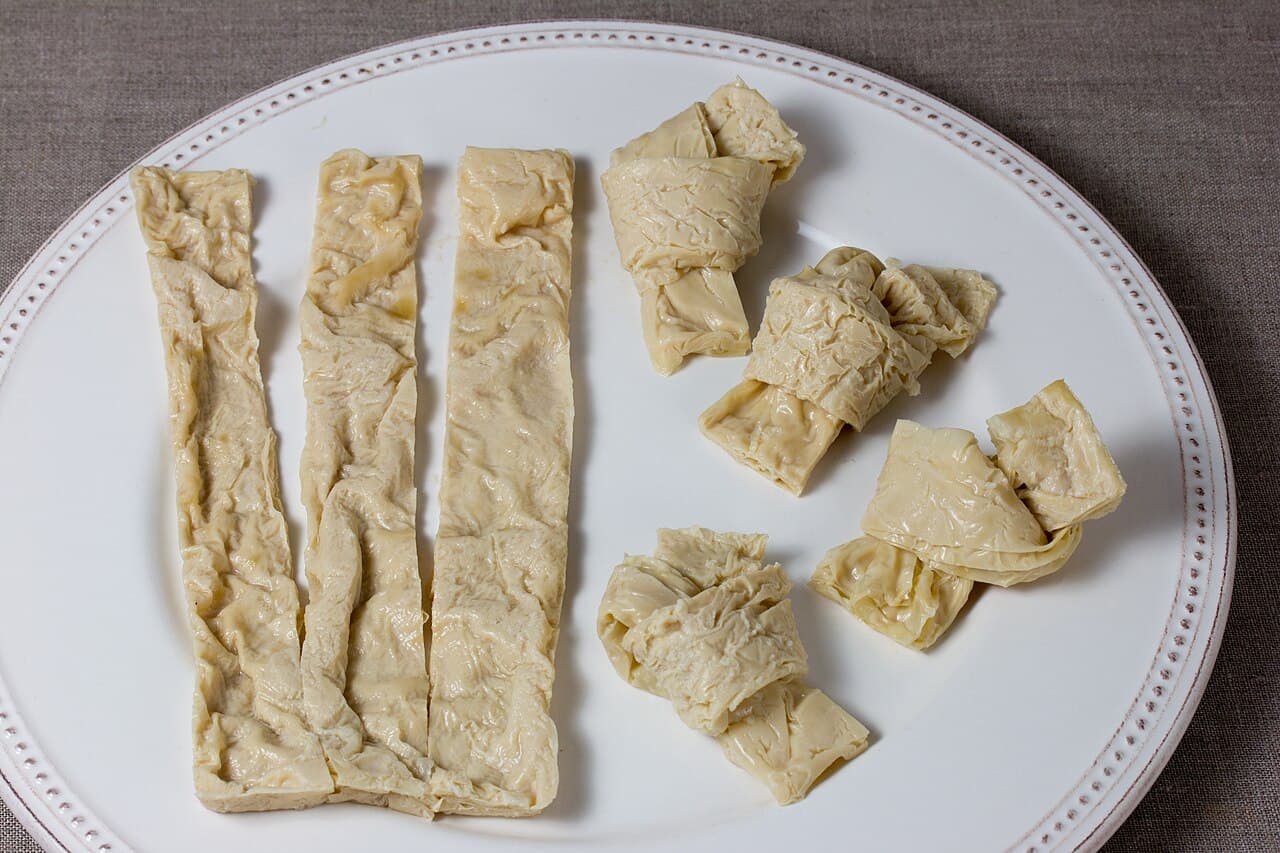
Tousuiro Kiyamachi, Kyoto — Tofu Kaiseki + Vegan Course
Silky oboro tofu and yuba in a seasonal multi-course meal
Tousuiro Kiyamachi is an upscale riverside tofu-kaiseki house in central Kyoto, serving silky oboro tofu and yuba in seasonal multi-course form, with a full English menu and summer riverside (kawayuka) seating. It offers a dedicated fish-free vegan course ('Rokuhara') with no meat, shellfish, egg, dairy or fish -- but you must order that specific course, since the standard tofu courses likely use bonito dashi.
- Pescatarian
- Vegetarian
- Vegan
- Dairy-free
- Date
- Anniversary
- Business
- Private room
Sources
- 篩月(しげつ)— 精進料理・お品書きと料金
- Shigetsu — Shojin ryori at Tenryu-ji (English)
- 京都下鴨 豆乳ラーメン専門店「豆禅」(TOWZEN) — 営業時間・予約について
- 祇園豆乳ら〜めん うのゆきこ / UNO RAMEN — stores, 100% plant-based & gluten-free noodles
- UNO RAMEN 店舗案内 — 4店舗の所在地と営業時間
- UNO RAMEN よくあるご質問 — 予約は三条店のみ/五葷を含まないメニュー
- とうふ料理 豆水楼 — 木屋町店 店舗情報(住所・電話・営業時間・予約の電話時間帯)
- 豆水楼 木屋町店の御献立 — 六波羅(ベジタリアン向け)¥12,000
- Dashi — common bases (kombu, katsuobushi, niboshi, shiitake)
FAQ
- Which restaurants in Kyoto are fully vegan, so I don't have to ask about dashi?
- Shigetsu, inside the Tenryu-ji temple grounds in Arashiyama, serves only shojin (Zen temple) set meals. Towzen in Shimogamo is a vegan soy-milk ramen specialist. UNO RAMEN states that no dish at any of its four Kyoto branches contains animal-derived ingredients. At every other Kyoto restaurant, assume fish dashi until the staff tell you otherwise.
- How much is a shojin lunch at Tenryu-ji, and do I need to book?
- Tenryu-ji's Shigetsu lists three set meals: Yuki ¥3,800, Tsuki ¥6,500 and Hana ¥9,000, served 11:00–14:00 and closed on Thursdays, with temple garden admission charged separately at ¥500 per guest. Booking is required — at least two days ahead for Yuki, and three days ahead with a party of two or more for Tsuki and Hana (as of 2026-09-23).
- Can I get vegan ramen in Kyoto without a reservation?
- Yes. Towzen in Shimogamo has stopped accepting reservations entirely, so it is walk-in only — it is closed Wednesday and Thursday, and serves dinner only on Friday, Saturday and Sunday. UNO RAMEN takes reservations at its Sanjo branch only, so its other three Kyoto shops are walk-in too; the one on the 10th floor of the Kyoto Station Building, inside Kyoto Ramen Koji, serves 11:00–22:00 with last order at 21:30 (as of 2026-09-23).
- Is Tousuiro's vegetarian course vegan?
- Not confirmed. The Kiyamachi main branch offers a named vegetarian course, Rokuhara, at ¥12,000, and its menu says the course uses no seafood, meat or dairy whatsoever. Egg and honey are not mentioned in that description, so strictly vegan diners should settle both by phone on 075-251-1600 when booking.
- How do I ask for vegan food in Kyoto?
- The phrase that does most of the work is "sakana dashi nashi de" (without fish stock), because fish stock is the hidden ingredient in otherwise vegetable dishes. Then name egg (tamago), dairy (nyuseihin) and honey (hachimitsu) separately, since that phrase does not cover them. At a shojin restaurant such as Shigetsu the whole menu is already plant-based, so there is nothing to ask.