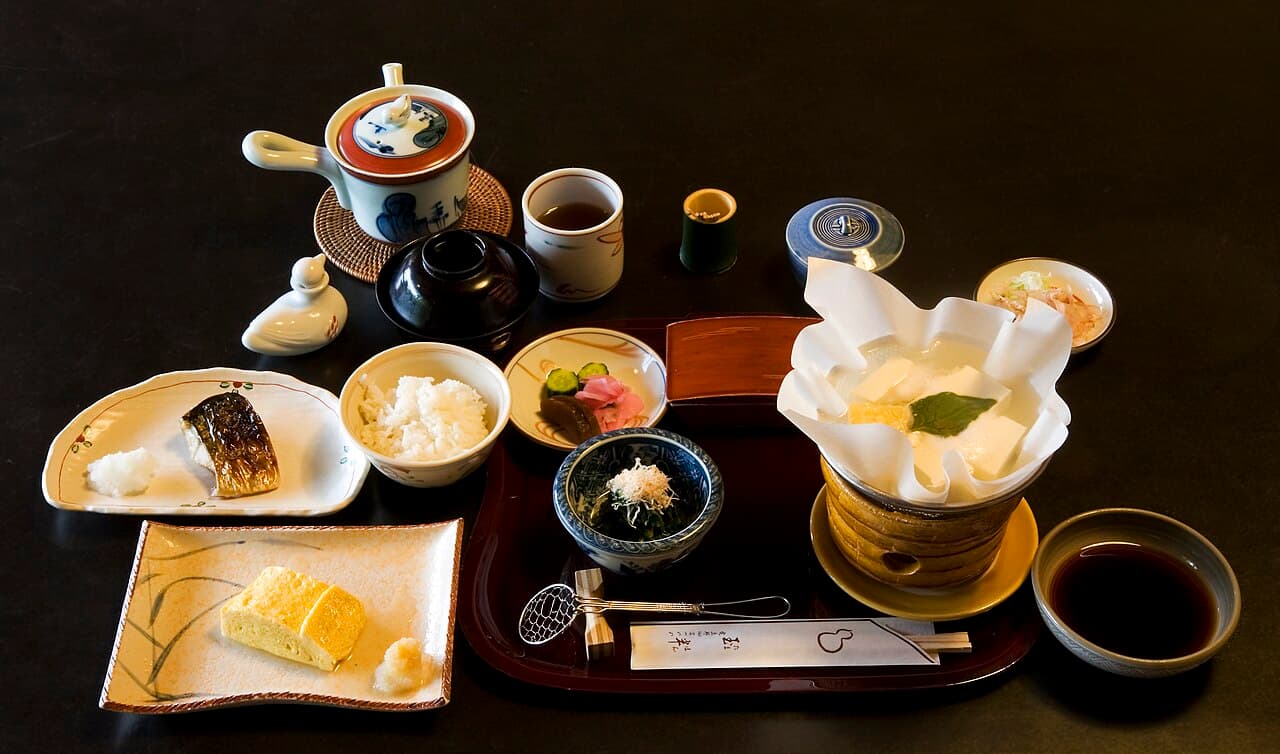
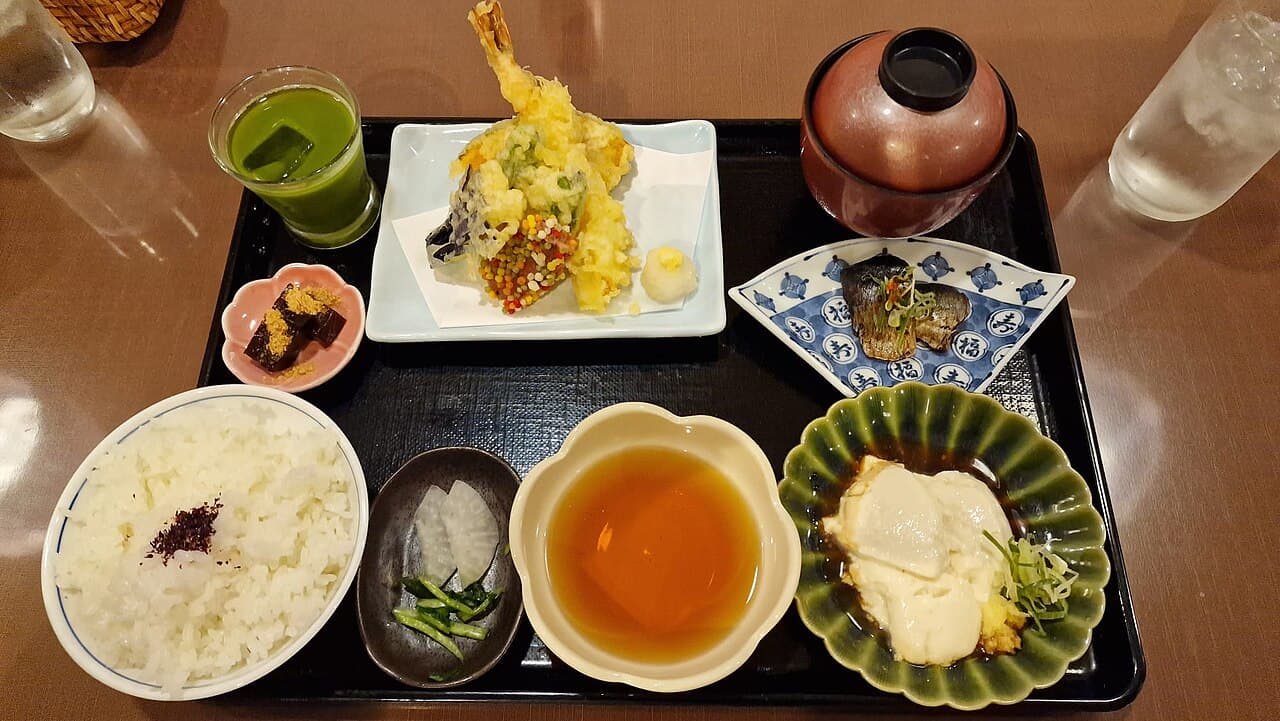
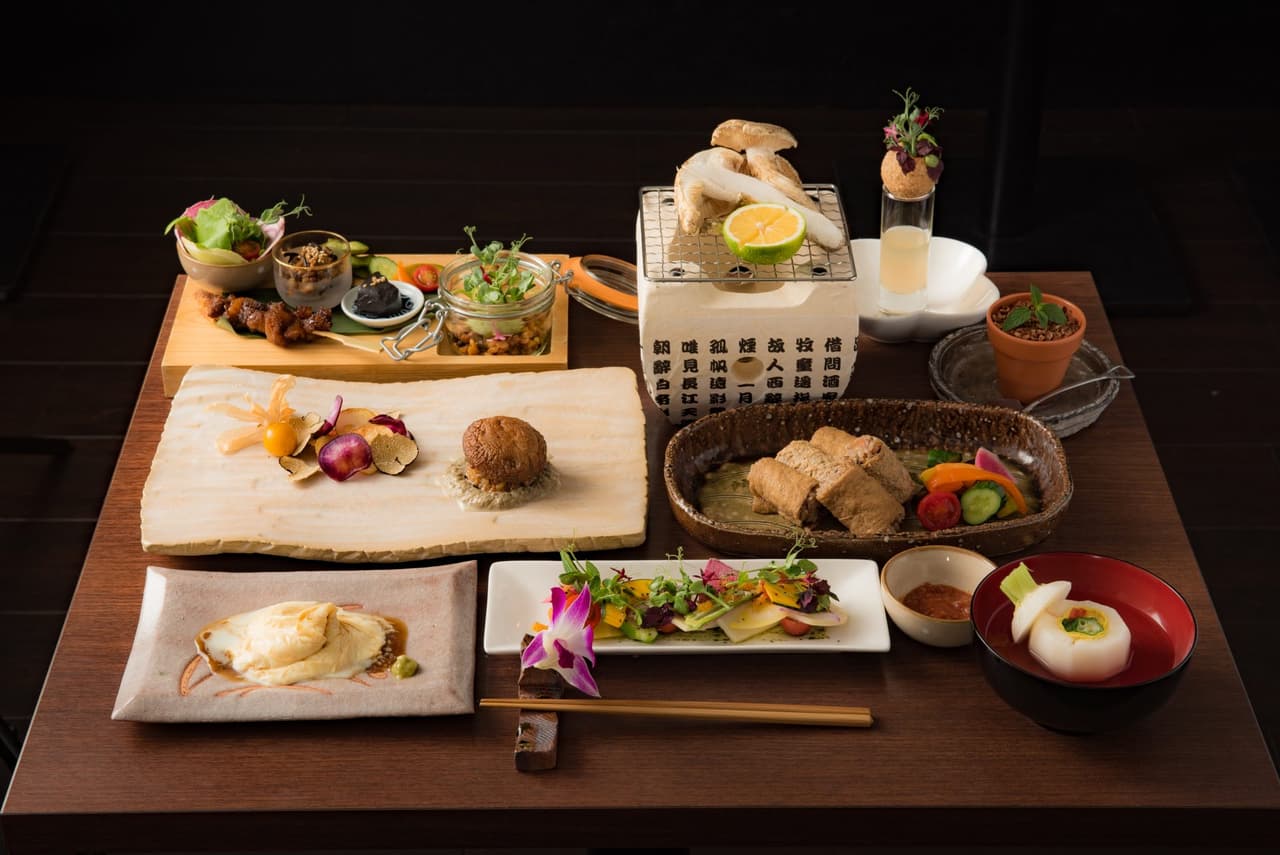
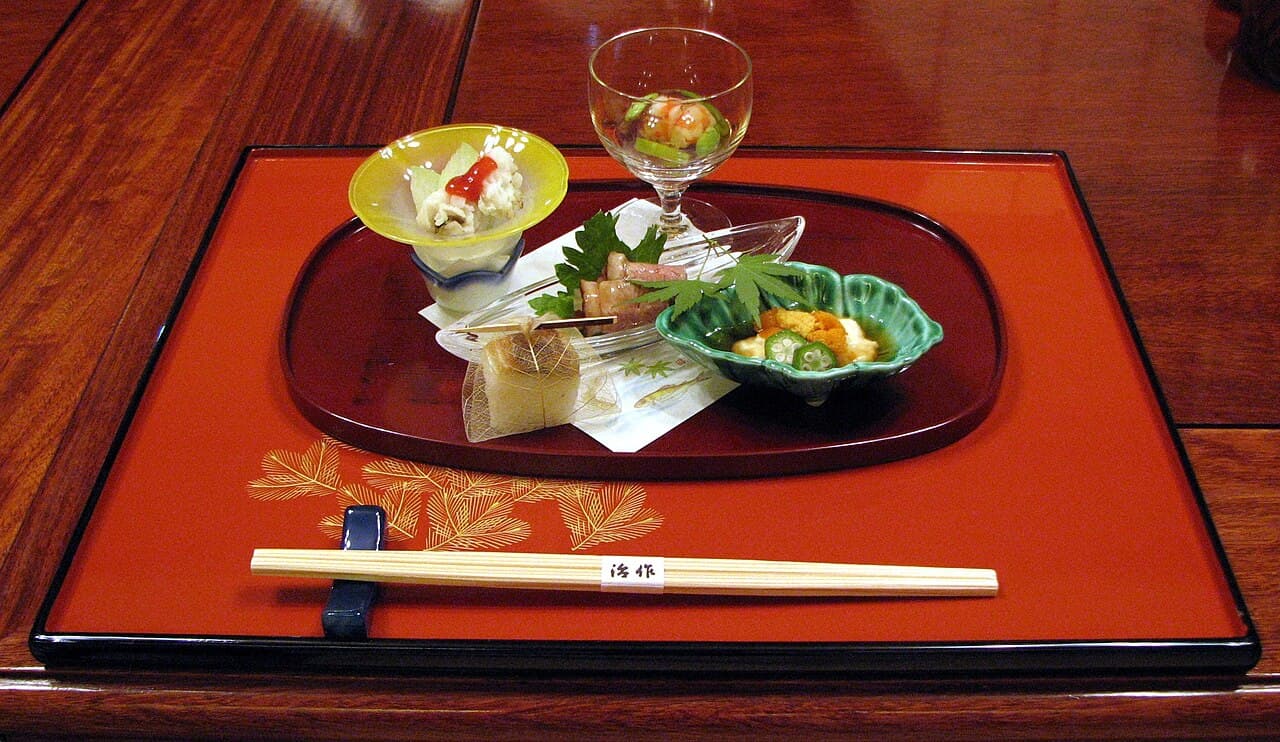
Kaiseki is a multi-course seasonal menu, the pinnacle of washoku (traditional Japanese cuisine). Small, precise dishes move through cooking methods — raw, simmered, grilled, steamed — each tuned to the moment of the year and presented on chosen ware.
What it means
Kaiseki grew from the tea ceremony's spirit of hospitality (omotenashi) and Zen restraint. Every detail — the order, the seasonal leaf, the bowl — is a quiet message from host to guest. It's less a meal than a composed experience.
Why it's wonderful
It's the deepest way to taste the Japanese seasons in one sitting: subtle, balanced, never heavy, building slowly to a gentle, memorable whole.
Classic kaiseki uses dashi (fish). Vegan/shojin kaiseki — built on kelp and shiitake — is a glorious plant-based alternative.
FAQ
What is Kaiseki?
Japan's seasonal tasting menu, course by course.
Is Kaiseki vegetarian, vegan, halal or gluten-free?
Classic kaiseki uses dashi (fish). Vegan/shojin kaiseki — built on kelp and shiitake — is a glorious plant-based alternative.
💬Recipes and preparation vary by restaurant, so this is a general guide. If you're ever unsure, please confirm directly with the venue before you order — they'll appreciate the heads-up.
Where to try it — and book a table
Hand-picked spots for this dish, each with a working reservation link. Tap to book.
★ Seasonal shojin kaiseki paired with sake and wine, refreshed every three weeks
A refined Roppongi shojin restaurant led by chef Daisuke Nomura, formerly of two-Michelin-starred Daigo, pairing plant-based Zen cuisine with carefully chosen sake and wine.
★ Plant-based 'meat & fish' course made entirely from vegetables
Once crowned the world's #1 vegan restaurant on HappyCow, this Jiyugaoka temple of 'new washoku' conjures convincing meat and fish dishes from nothing but vegetables — and welcomes vegan and Muslim diners alike.
★ Seasonal kaiseki of Kamakura vegetables, tofu and wheat gluten in a garden dining room
A serene garden-side kaiseki house in temple-filled Kita-Kamakura, descended from a rice-ball shop founded in 1964 in front of Kencho-ji, a few minutes' walk from the station. Its everyday menu is seasonal kaiseki built on Kamakura vegetables, tofu and wheat gluten, but it will prepare a fish-free Buddhist shojin (vegetarian) course for vegetarian and Muslim guests when booked in advance — so reserve and state your needs rather than assuming the standard course is meat-free. Closed Thursdays.
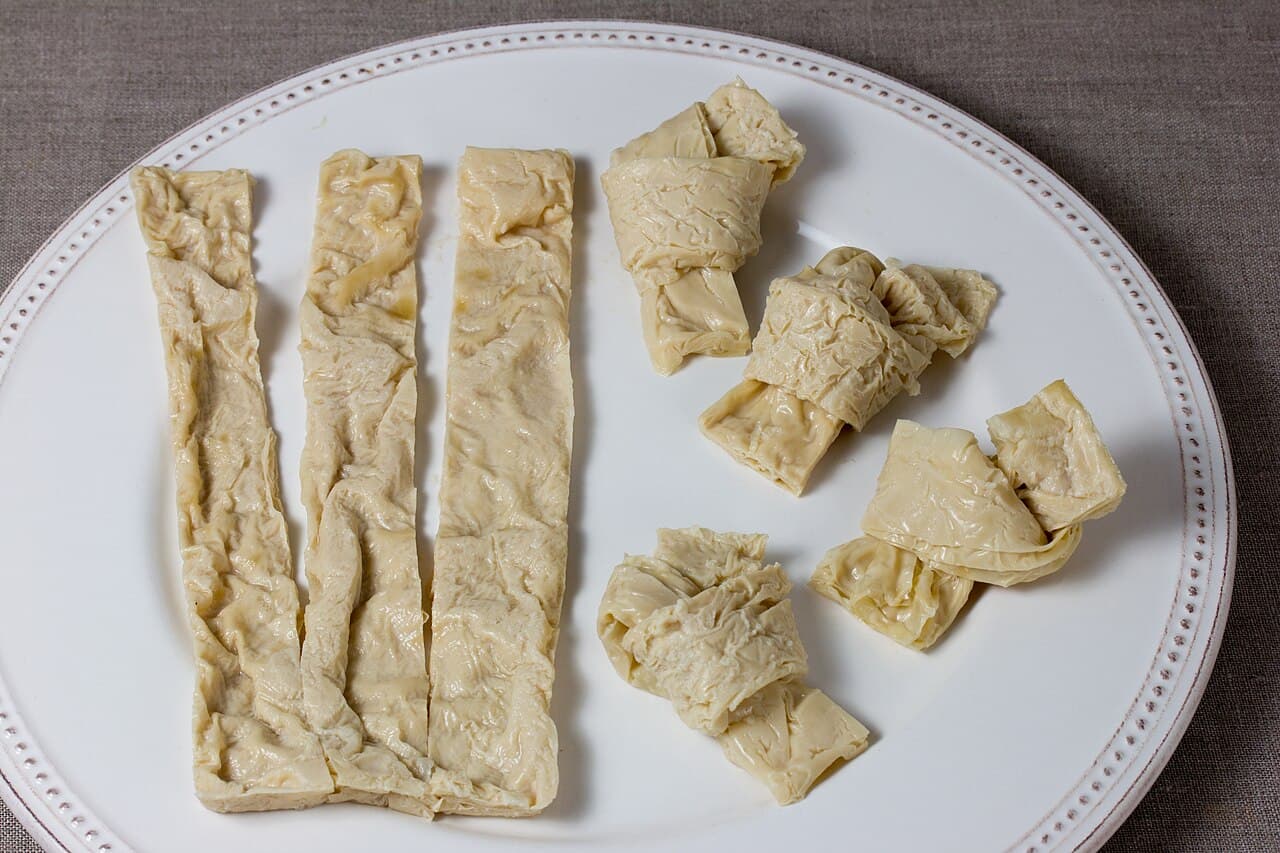
★ Silky oboro tofu and yuba in a seasonal multi-course meal
Tousuiro Kiyamachi is an upscale riverside tofu-kaiseki house in central Kyoto, serving silky oboro tofu and yuba in seasonal multi-course form, with a full English menu and summer riverside (kawayuka) seating. It offers a dedicated fish-free vegan course ('Rokuhara') with no meat, shellfish, egg, dairy or fish -- but you must order that specific course, since the standard tofu courses likely use bonito dashi.
★ Seasonal Mie-Prefecture kaiseki course (halal version on request)
A counter-style kaiseki restaurant in Nishi-Azabu offering a dedicated multi-course menu made without pork, alcohol or mirin on advance request. Muslim-friendly / pork- and alcohol-free (not formally certified); book the halal course about a week ahead.