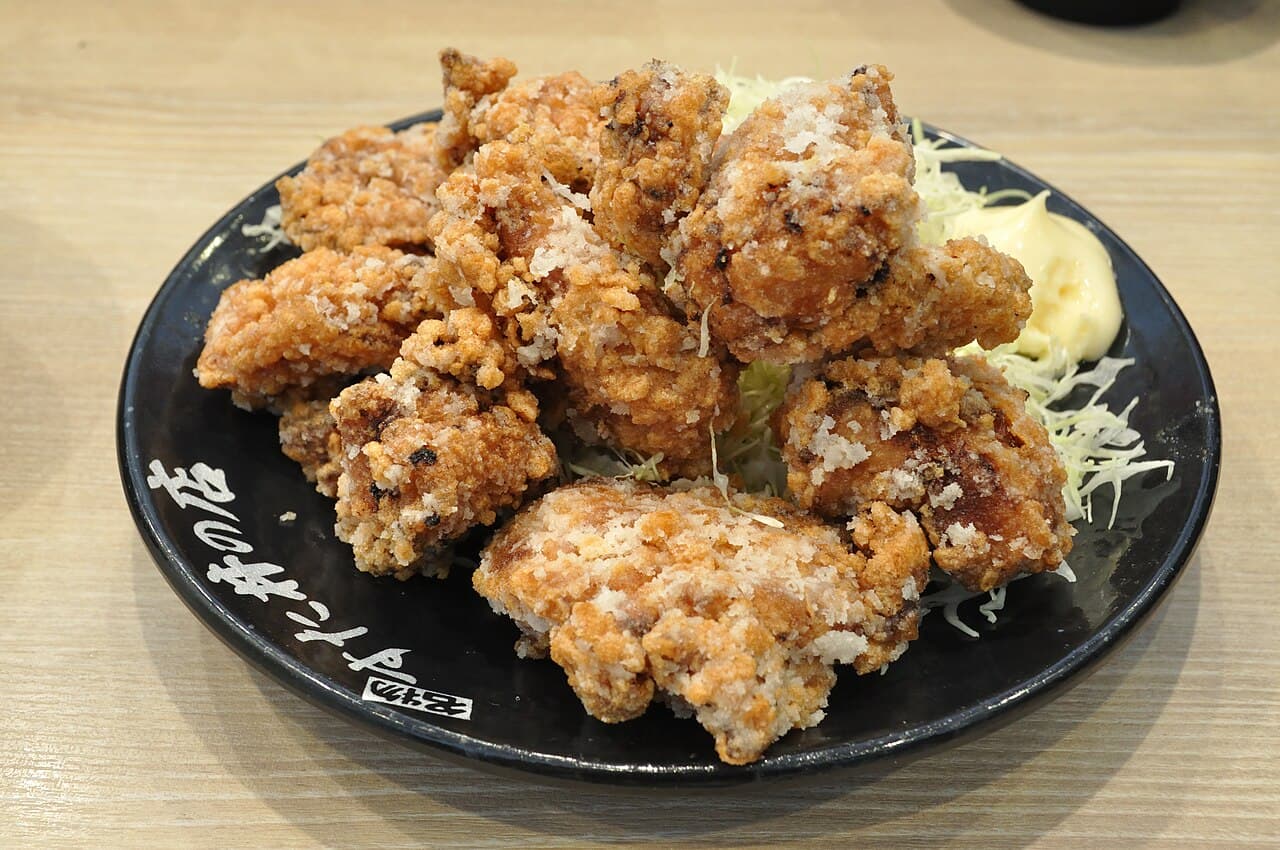
Karaage is Japanese fried chicken: bite-size thigh pieces marinated in soy, ginger, garlic and sake, dusted in potato starch, and fried until shatteringly crisp. Served with a wedge of lemon and a dab of mayonnaise — the king of izakaya and bento.
What it means
Light, juicy and made for sharing, karaage is comfort food the whole country agrees on. Every region and home has its own marinade; tebasaki (Nagoya-style glazed wings) are a famous cousin.
Why it's wonderful
The starch coating fries up lacy and crackly while the marinade keeps the meat dripping. A squeeze of lemon and an ice-cold beer is one of Japan's great simple pleasures.
Is Karaage vegetarian, vegan, halal or gluten-free?
Chicken marinated in soy (wheat) and sometimes sake — not gluten-free unless made with tamari or rice flour.
💬Recipes and preparation vary by restaurant, so this is a general guide. If you're ever unsure, please confirm directly with the venue before you order — they'll appreciate the heads-up.
Where to try it — and book a table
Hand-picked spots for this dish, each with a working reservation link. Tap to book.
★ Vegan kara-age (plant-based 'fried chicken') and vegan gyoza
A fully plant-based izakaya in the basement of Shibuya PARCO serving vegan 'fried chicken', gyoza and lemon sours, with no meat, fish, eggs, dairy or honey, so the fish-dashi trap does not apply. It is not gluten-free, as the mock-meat batters and soy sauce contain wheat.
★ Tempeh cutlet, double curry, hummus sandwich and vegan karaage
An all-vegan cafe opened in 2013 in a renovated warehouse by a riverside park between Kinshicho and Tokyo Skytree, using organic, pesticide-free produce. The whole menu is plant-based, from curries and tempeh cutlets to soft-serve desserts.
A dedicated gluten-free cafe whose entire kitchen is wheat-free, serving GF Japanese comfort food such as gyoza, karaage, ramen and yakisoba with English-marked menus. Its Tabelog listing is currently status-undetermined, so confirm hours via its Instagram before visiting.
The towering wooden-beamed izakaya that inspired Kill Bill's House of Blue Leaves, where lantern light conjures an Edo-era warehouse over plates of fresh soba and charcoal skewers.