
Dietary guide
Is miso soup vegan or vegetarian in Japan?

The short answer
Miso soup looks like the safest thing on the table, but in Japan it is usually neither vegan nor vegetarian. The reason is the broth: nearly all everyday miso soup is built on dashi made from katsuobushi (bonito) and sometimes niboshi (sardines). The soybean miso paste, the tofu, the wakame seaweed and the spring onion are all plant-based — it is the fish stock underneath that crosses the line. See is dashi vegan? for the full picture.
The hidden traps
Even "instant" miso has fish in it: convenience-store sachets and "dashi-iri" (dashi-blended) miso paste contain bonito or sardine extract. A topping of katsuobushi flakes can also land on the tofu. None of this is visible in the finished bowl, which is exactly why it surprises visitors.
How to get a plant-based bowl
The good news: a properly vegan miso soup is easy to make and increasingly easy to order. Shops that follow shojin ryori (Buddhist temple cooking) and dedicated vegan kitchens use kombu (kelp) or shiitake dashi, so the soup is 100% plant-based. Macrobiotic and organic cafes almost always do too. If you keep vegetarian rather than strict vegan, the same kelp-dashi bowls work for you.
What to say
Ask: "Kombu dashi no miso shiru wa arimasu ka?" — is there a kelp-stock miso soup? Recipes vary by kitchen, so when it matters, confirm with the staff before ordering; a quick question is always welcome.
Places we’ve confirmed

Komaki Shokudo
Kuchifuku set — nine seasonal vegan sides with rice and miso soup
A casual, affordable vegan cafeteria run by a Kamakura temple lineage beneath the Akihabara rail arches, where even garlic and onion are forsaken in true shojin style.
- Vegetarian
- Vegan
- Solo
- Casual
Brown Rice by Neal's Yard Remedies
Seasonal brown-rice set (ichiju-sansai) and steamed vegetables
An organic, plant-centered Japanese canteen by Neal's Yard Remedies near Omotesando Station, open since 2003. It serves seasonal brown-rice set meals (ichiju-sansai) and steamed vegetable plates.
- Vegetarian
- Vegan
- Casual
- Solo
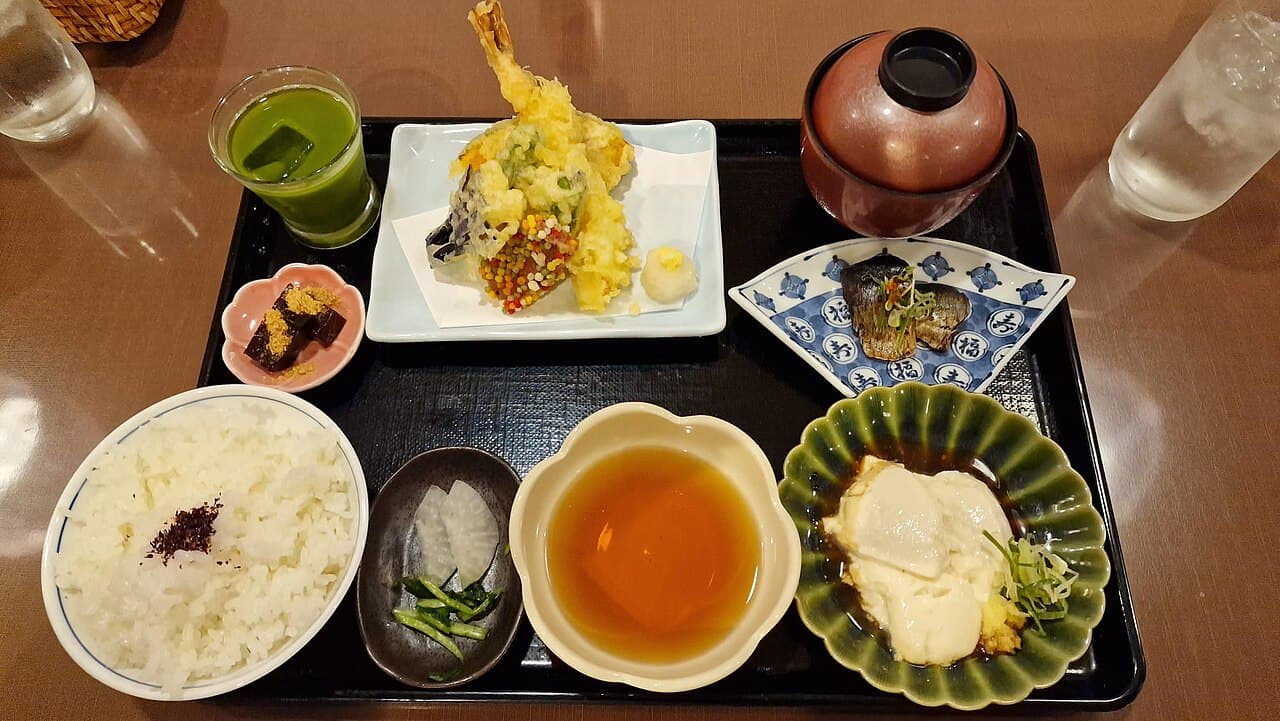
Sougo Roppongi: Vegan-Friendly Shojin Kaiseki — Menu, Prices, Hours
Seasonal shojin kaiseki paired with sake and wine, refreshed every three weeks
Sougo is a shojin (Buddhist vegetarian) kaiseki restaurant in Roppongi that caters to vegans on request — tell them at least two days ahead. Dinner Zen ¥15,400 / Hasu ¥18,700 (+10% service), lunch from ¥1,980; closed Sundays and holidays; book via TableCheck. Checked 2026-10-11.
- Vegetarian
- Vegan
- Anniversary
- Business
- Date
FAQ
- Is miso soup vegan?
- In Japan, usually not. The miso paste (soybeans, koji, salt) is plant-based, but standard miso soup uses dashi made from katsuobushi (bonito) or niboshi (sardines). Only bowls made with kombu or shiitake dashi are vegan.
- Is the miso paste itself vegan?
- Plain miso (soybeans, koji, salt) is vegan. But 'dashi-iri' miso has fish stock blended in, so read the label or ask.
- Is instant miso soup vegan?
- Mostly not. Convenience-store and supermarket sachets usually contain bonito or sardine extract. Check the ingredient label: かつお / 宗田かつお (bonito), 煮干 (niboshi), あご (flying fish), あじ (horse mackerel), 魚介エキス (seafood extract) or 貝エキス (shellfish extract) mean fish or shellfish; たん白加水分解物 (hydrolysed protein) does not show its source, so ask the maker. Kombu-, shiitake- or vegetable-only dashi can be plant-based.
- Is the miso soup at a sushi restaurant vegetarian?
- Usually no — it is typically made with bonito dashi, and the variant served with fish trimmings (ara-jiru) certainly is not. Ask for a kelp-dashi version.
- How do I order vegan miso soup in Japan?
- Go to a shojin ryori (temple cuisine) or dedicated vegan restaurant, or ask: "Kombu dashi no miso shiru wa arimasu ka?" (Is there a kelp-stock miso soup?).