
Dietary guide
Vegan Curry in Japan: Where to Eat It (Checked October 2026)
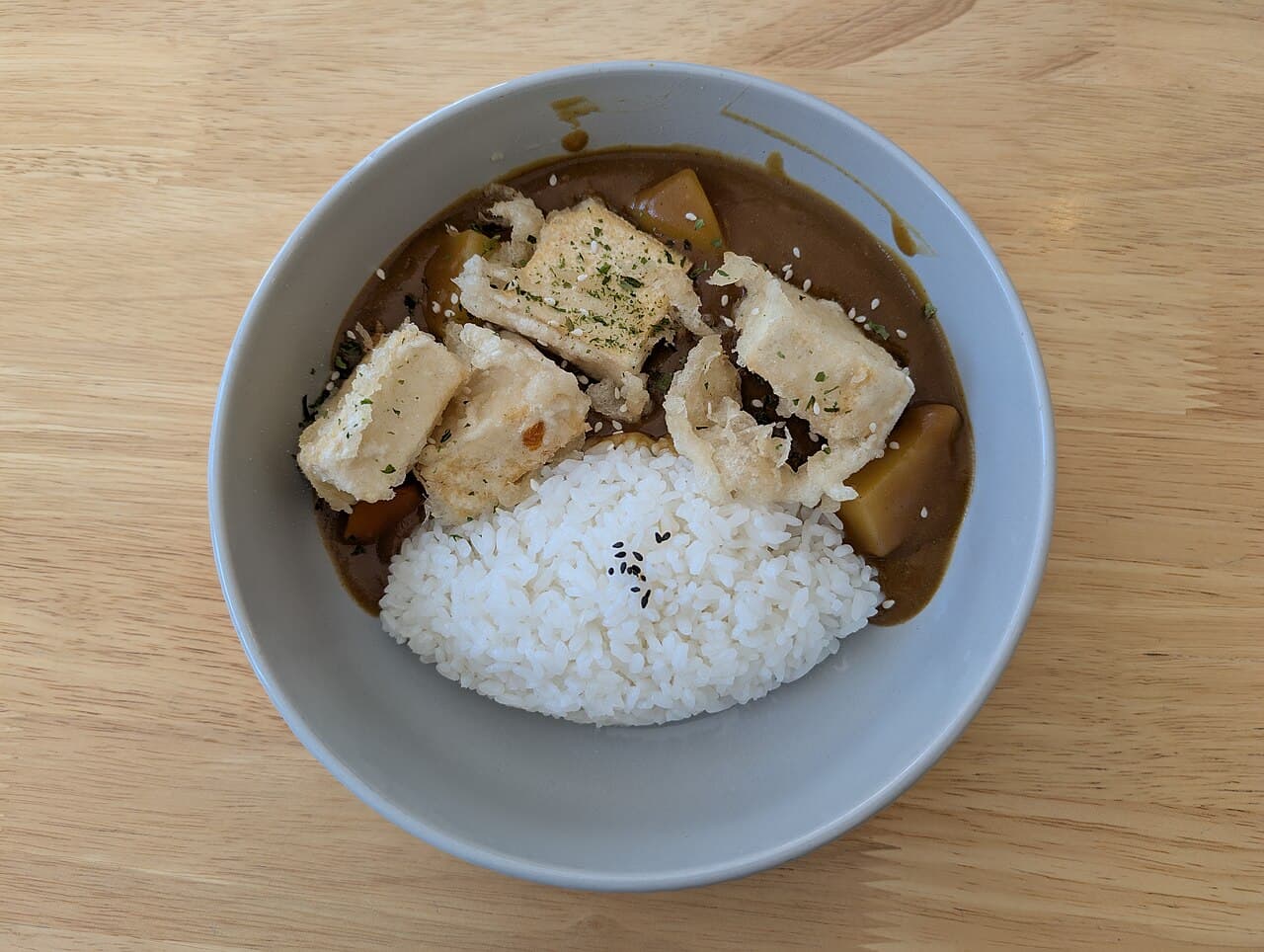
Short answer: for vegan curry in Japan, eat at Marugoto Vegan Dining in Asakusa, a 100% vegan restaurant, or at Bakumatsu Curry in Shibuya, a soup-curry shop whose stock, according to its operator, uses no animal ingredients — or, anywhere else, order CoCo Ichibanya's CoCoICHI vegetarian curry (¥683 including tax, standard dine-in price) by its exact name. Ordinary Japanese curry is a poor bet: most commercial roux blocks are built on animal fat, and many restaurant sauces lean on bonito (katsuo) dashi. Marugoto Vegan Dining and CoCo Ichibanya were re-checked against their official pages on 13 October 2026; for Bakumatsu Curry, the latest primary source we found is its October 2025 opening press release.
| Where | What it is | Area | Check before you go |
|---|---|---|---|
| Marugoto Vegan Dining Asakusa | 100% vegan and gluten-free restaurant; curry on the menu | 1-3-13 Hanakawado, Taito-ku (1 min from Asakusa Station exit 5) | Opening days on the official site; book via TableCheck |
| Bakumatsu Curry (幕末カリー) | Vegetable soup curry; the operator says the stock uses no animal ingredients | Shibuya-ku (opened in Shōtō on 10 October 2025) | Confirm the current location and hours before you go; ask about toppings and side dishes |
| CoCo Ichibanya | National chain; one plant-based item, the CoCoICHI vegetarian curry | Nationwide | Not every branch carries it; some stores price it differently |
Vegan curry restaurants in Tokyo (re-checked October 2026)
Marugoto Vegan Dining Asakusa (1-3-13 Hanakawado, Taito-ku — one minute on foot from exit 5 of Asakusa Station on the Ginza Line) describes itself as "a 100% vegan and gluten-free restaurant," and its reservation page states that every menu item is vegan. Curry is a regular part of the menu — the restaurant has featured an avocado curry, for example — so you do not need to interrogate the sauce. Opening days and lunch/dinner service change through the year, so check the official site's opening-day calendar before you go, and reserve through TableCheck if you can: it is a small room.
Bakumatsu Curry (幕末カリー) is a vegetable soup-curry specialist run by ALL FARM, the company behind the organic restaurant WE ARE THE FARM. According to ALL FARM's press release, it opened on 10 October 2025 at 1-28-11 Shōtō, Shibuya, as the first shop of a new line. We could not find a 2026 primary source confirming that it still operates at that address, and later listings disagree with the release on its address and hours. The operator says its soup stock uses no animal ingredients and draws its depth from more than ten kinds of seasonal vegetables, many grown on the company's own farm in Sakura, Chiba, and the curry is served in a custom-made clay pot. The release does not say the whole menu is plant-based — dinner adds small vegetable dishes, and there are toppings and drinks — so confirm toppings and sides with the staff. Check the shop's current location and hours before making the trip.
Outside the big cities: the chain fallback
CoCo Ichibanya, the nationwide curry chain, has one item it describes as using no animal-derived ingredients: order the CoCoICHI vegetarian curry (ココイチベジカレー, ¥683 including tax at standard stores, checked 2026-10-13) by name, because the regular sauce is a different product — and note that some stores price it differently or do not carry it. The full ordering rules are in our CoCo Ichibanya vegan guide.
Why ordinary Japanese curry usually isn't vegan
Curry that looks like "just vegetables" is usually built on a commercial roux block made with animal fat, dairy, honey or gelatin, and many restaurant sauces add bonito (katsuo) dashi. The brand-by-brand labels are in is Japanese curry vegan?.
How to order curry safely as a vegan
- Ask directly: "Vegan desu ka?" (ビーガンですか?) or, more specifically, "Katsuobushi dashi wo tsukatte imasu ka?" (かつお節だしを使っていますか? — "Do you use bonito dashi?"). Staff at dedicated vegan spots will know exactly what you mean; at general restaurants, the dashi question is the one that actually matters.
- At curry chains, ask whether the roux is house-made or a boxed product, and whether a plant-based item exists on the menu — at CoCo Ichibanya, that means the vegetarian curry by name.
- If you're cooking at home or shopping, look for roux boxes explicitly labeled vegan or "no animal-derived ingredients" in English rather than assuming a familiar brand name is safe — formulations vary by SKU.
Japanese curry doesn't have to be off-limits. With a couple of dedicated restaurants, a chain option ordered by its exact name, and the right two questions in your back pocket, it's one of the more reliably satisfying vegan meals you can find in Japan.
Marugoto Vegan Dining's details and CoCo Ichibanya's price were checked against official pages on 13 October 2026; Bakumatsu Curry's details come from its October 2025 opening press release. Hours, menus and prices change — confirm with the restaurant before you travel.
Sources
- 10 Best Vegan Restaurants in Tokyo, Japan - 2026 - HappyCow
- Marugoto Vegan Dining Asakusa - Tokyo Restaurant - HappyCow
- Bakumatsu Curry - 幕末カリー - Tokyo Restaurant - HappyCow
- CoCo Ichibanya: The Vegan-Friendly Curry Chain in Japan
- [CoCo Ichibanya] Vegetarian and vegan menu 'Coco Ichi-Veggie Curry'! | Japanese Vegan/Vegetarian Life
- 10 Japanese Foods That Aren't Vegan! - byFood
- Curry | Is it Vegan? (Japan)
- CoCo Ichibanya official menu: CoCoICHI vegetarian curry (¥621 / ¥683 incl. tax; some stores do not carry it)
- CoCo Ichibanya official English site: "A curry only using plant-based ingredients"
- Marugoto Vegan Dining Asakusa official site: 100% vegan and gluten-free; address
- Marugoto Vegan Dining Asakusa reservations (TableCheck): all menu items vegan
- ALL FARM press release: Bakumatsu Curry opens in Shibuya Shōtō (10 October 2025)
FAQ
- Where can I eat vegan curry in Japan?
- In Tokyo, Marugoto Vegan Dining Asakusa (1-3-13 Hanakawado, Taito-ku) is a 100% vegan and gluten-free restaurant with curry on the menu, and Bakumatsu Curry, a vegetable soup-curry shop that opened in Shibuya's Shōtō in October 2025, makes its stock without animal ingredients, according to the operator — confirm its current location and hours, and ask about toppings and sides. Anywhere in Japan, CoCo Ichibanya's CoCoICHI vegetarian curry (¥683 including tax at standard stores) is the chain fallback, though not every branch carries it. Marugoto and CoCo Ichibanya checked 13 October 2026.
- Is there vegan curry at chain restaurants in Japan?
- One reliable option: CoCo Ichibanya's CoCoICHI vegetarian curry (ココイチベジカレー), which the company describes as using no animal-derived ingredients — ask for it by name, since the regular sauce is different. It is ¥683 including tax at standard stores; some stores price it differently or do not carry it (checked 2026-10-13). Ordering details are in our CoCo Ichibanya vegan guide.
- What Japanese phrase should I use to ask if curry contains fish stock?
- Ask "Katsuobushi dashi wo tsukatte imasu ka?" (かつお節だしを使っていますか?), meaning "Do you use bonito dashi?" This is more precise than just asking if a dish is vegetarian, since dashi is the most common hidden animal ingredient in Japanese sauces.