
Halal & Vegan
Halal and Vegan in Japan: What Plant-Based Solves, and What It Doesn't
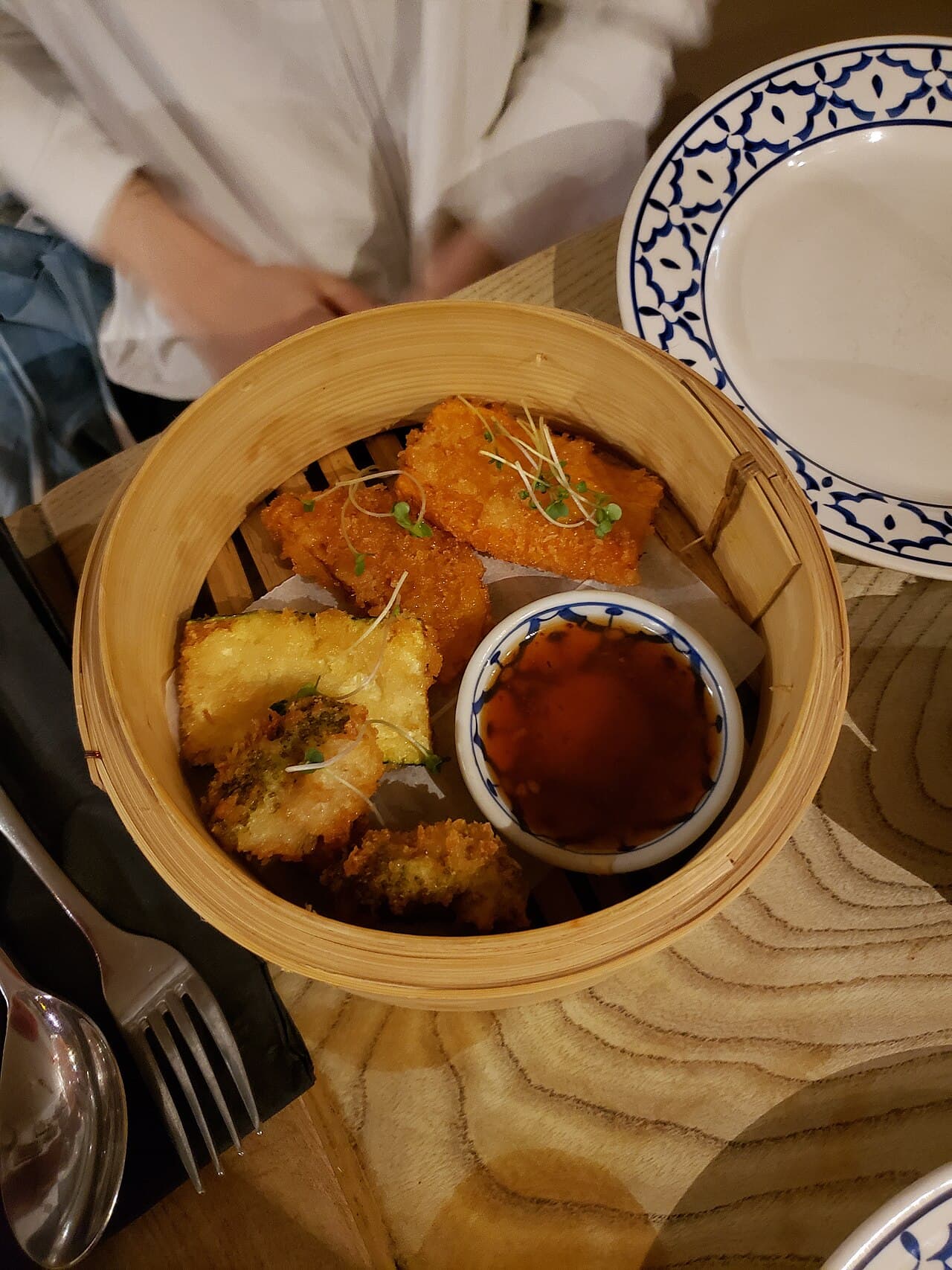
Vegan clears pork, lard and gelatin, but it is not automatically halal in Japan. The reason is cooking alcohol: choosing plant-based food removes the ingredients most Muslim travelers worry about first — pork, bacon, lard, meat, meat broth and gelatin — yet it says nothing about the sake and mirin that season Japanese cooking almost everywhere. This guide is for Muslim-vegan travelers and anyone curious about the overlap: what plant-based already solves, what it doesn't, and how to ask — precisely and respectfully.
What going plant-based already solves
If a kitchen genuinely cooks a dish plant-based, several classic halal concerns disappear at the same time:
- Pork, bacon and lard — gone. Lard (ラード) hides in some ramen broths, curry roux blocks and pastries, so this overlap matters more than it sounds. See hidden animal ingredients in Japanese food.
- Gelatin — gone. Pork-derived gelatin turns up in mousses, gummies, some yogurts and jelly desserts.
- Meat and meat-based broth — gone by definition.
- Fish stock (dashi) — a real bonus. Bonito (katsuo) and sardine (niboshi) dashi form the base of countless "vegetable" dishes; because vegans avoid it too, choosing a vegan kitchen sidesteps it. Still confirm the dashi is kombu- or shiitake-only — see is dashi vegan in Japan.
For the bigger picture of how workable this is on the ground, see is Japan vegan-friendly.
The one thing vegan does not solve: cooking alcohol
Here is the honest catch. Vegan diets have no objection to alcohol, so a 100% plant-based plate can still be seasoned with it — and in Japanese cooking, it usually is.
Two seasonings do most of the hiding:
- Mirin (味醂) — a sweet rice wine. Traditional hon-mirin contains roughly 14% alcohol and is legally classified as an alcoholic beverage in Japan; a cheaper "mirin-style seasoning" (mirin-fu chomiryo) contains under 1% or is alcohol-free (as of July 2026, per fooddiversity.today). It flavors teriyaki, simmered dishes (nimono), glazes, sauces and even some sushi rice.
- Cooking sake / ryorishu (料理酒) — added to marinades, broths and stir-fries as standard practice.
Because mirin and sake are treated as everyday seasoning rather than "alcohol," staff often don't mention them unless you ask directly.
| Ingredient / concern | Does plant-based remove it? | Halal question remaining |
|---|---|---|
| Pork, lard, bacon | Yes | Resolved |
| Gelatin (desserts) | Yes | Resolved |
| Meat & meat broth | Yes | Resolved |
| Fish dashi (katsuo / niboshi) | Yes (vegan avoids it) | Confirm kombu-only |
| Mirin (味醂) | No — vegan-friendly | Yes — ~14% ABV in hon-mirin |
| Cooking sake (料理酒) | No — vegan-friendly | Yes — alcohol seasoning |
| Vanilla / flavor extracts | Sometimes | Often alcohol-based |
How to ask — precisely and respectfully
Whether trace cooking alcohol that "burns off" is acceptable is a question of your own madhhab and conscience; scholars differ, and this guide will not rule on it for you. What it can do is help you get an accurate answer. Ask directly about alcohol and mirin rather than the word "halal," which many kitchens won't recognize:
- Arukoru ya mirin wa haitte imasu ka? — "Does this contain alcohol or mirin?"
- Ask about the broth and the sauce separately, since each may be seasoned differently.
A pocket set of these lines is in Japanese phrases for vegans. Certified-halal restaurants — where alcohol and cross-contamination are already controlled — remove the guesswork entirely, and their number is growing in Tokyo, Osaka and Kyoto.
Shojin ryori: a natural bridge
The closest thing Japan offers to a shared table is shojin ryori, Buddhist temple cuisine. It is fully plant-based — no meat, no fish, and traditionally no eggs or dairy — and it grows from a monastic tradition that also set aside the five pungent vegetables (garlic, onion and relatives, the gokun) and, historically, alcohol. That heritage makes it feel welcoming to both diets. Be careful, though: a modern temple or restaurant may still season with mirin or sake, so confirm rather than assume, and never treat "shojin" as a halal certificate. Start with the shojin vegetarian temple guide.
The bottom line
Plant-based eating is a powerful shortcut in Japan — it clears pork, lard, gelatin, meat and fish stock in one move. But vegan is not the same as halal: the alcohol question remains, and no dish should be called halal on plant-based grounds alone. Ask about mirin and sake, lean on certified-halal venues and shojin ryori, and you can eat well and eat honestly. More at the VEGAN JAPAN hub.
Sources
- What Is Mirin — And Is It Halal? A Clear Guide for Muslims in Japan (fooddiversity.today)
- Japanese Cuisine for All, Including Vegan, Vegetarian and Halal Selections (JNTO)
- Shojin Ryori (Buddhist Vegetarian Cuisine) — GO TOKYO Official Travel Guide
- Halal, Vegetarian & Vegan Dining in Japan: 2026 Guide (Halal Navi)
FAQ
- Is vegan food automatically halal in Japan?
- No. Plant-based food removes pork, lard, gelatin, meat and fish stock, but mirin and cooking sake (ryorishu) season many dishes, and vegan diets don't exclude alcohol. Confirm the alcohol question separately, and never call a plant-based dish halal on that basis alone.
- Does mirin contain alcohol?
- Yes. Traditional hon-mirin is about 14% alcohol and is legally classified as an alcoholic beverage in Japan; a cheaper 'mirin-style seasoning' is under 1% or alcohol-free (as of July 2026). It flavors teriyaki, simmered dishes and even some sushi rice.
- How do I ask a restaurant whether a dish contains alcohol?
- Ask 'Arukoru ya mirin wa haitte imasu ka?' ('does it contain alcohol or mirin?') rather than 'is it halal,' and ask about the broth and the sauce separately since each may be seasoned differently. Certified-halal venues remove the guesswork entirely.
- Is shojin ryori (Buddhist temple food) halal?
- It is fully plant-based and rooted in a tradition that also set aside alcohol, which makes it welcoming to both diets. But modern kitchens may still season with mirin or sake, so confirm rather than assume, and never treat 'shojin' as a halal certificate.